

Political science has been front of mind for many of us in the international maritime transportation industry as trade deals become enmeshed in tariffs and other policy matters.
While the trans-Pacific remains the primary route for Asia-to-US West Coast cargo, the question of routing alternatives is at an all-time high.
Starting in 2023, military activity by Houthi militants in the Red Sea and Gulf of Aden targeted commercial vessels and created a direct challenge to Suez Canal transits. This route from Asia to the US East Coast had seen significant growth with the deployment of mega-vessels within alliances utilizing slow steaming.
Twenty years ago, conventional wisdom established Singapore as the fulcrum for east-west deployment. It was hard to imagine that Suez services would start in China; however, that is what happened.
The Houthi threat resulted in most carriers rerouting from the Suez Canal to the Cape of Good Hope around southern Africa. This added up to two weeks in transit and resulted in almost all spare capacity being absorbed. While there has been some discussion of Suez transits resuming, the political instability in Iran has caused some hesitation because of the knock-on risks to crew and cargo.
The Suez route now has a theoretical challenge from the Northern Sea Route — which is estimated to be 20% to 40% shorter than the Suez. It could reduce transit time by weeks but still has significant seasonality concerns. Even summer and autumn transits require icebreaker escorts, although navigability is increasing with Arctic warming.
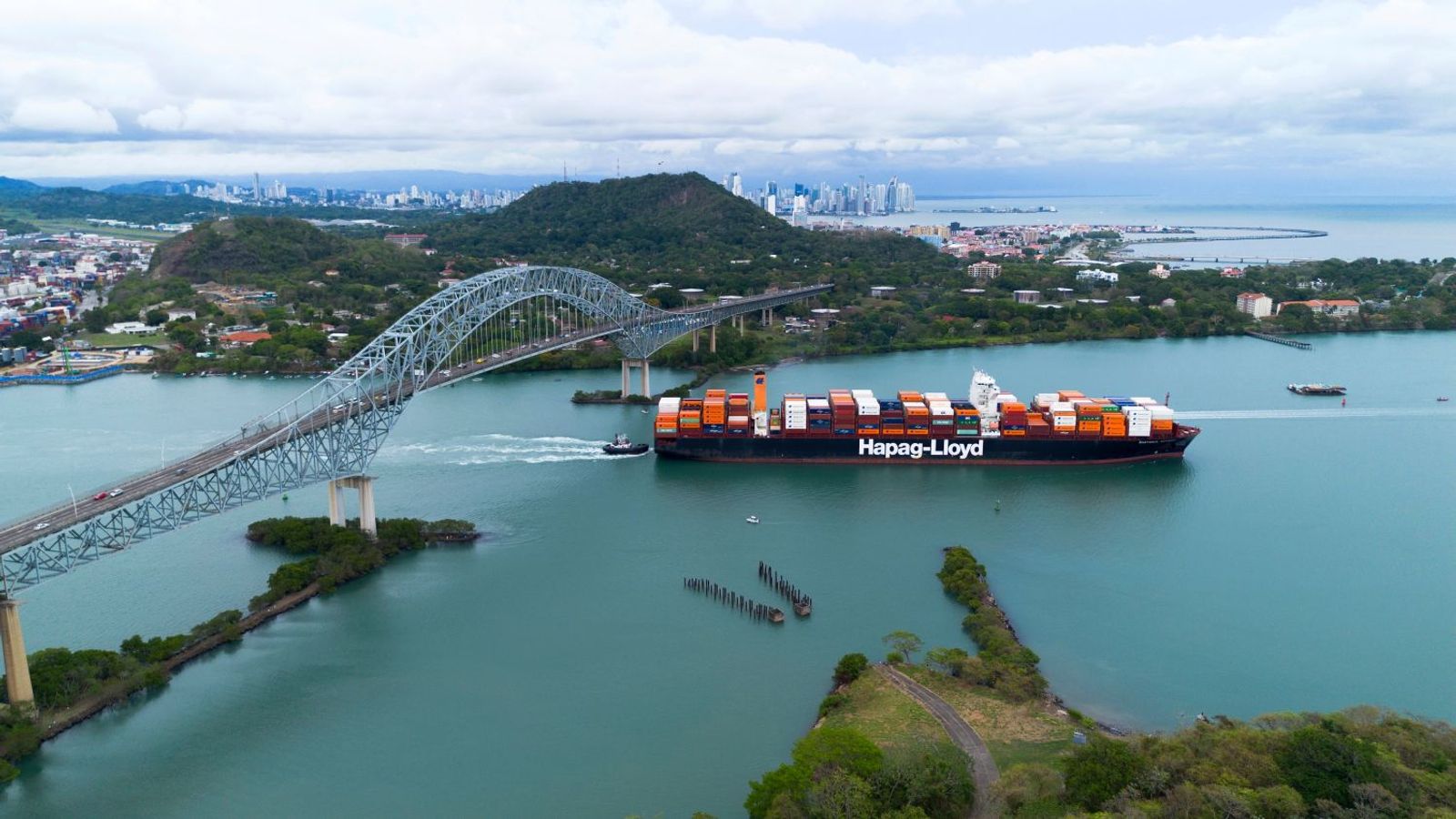
Donald Trump’s focus on Greenland has certainly raised the stakes here. Likewise, with the Panama Canal.
In his Jan. 20, 2025, inaugural address, Trump stated his intention to “take back” the Panama Canal, especially from alleged Chinese port control. That political pressure no doubt helped push CK Hutchison to arrange the sale of its extensive marine terminal portfolio to a consortium led by US investors (BlackRock/Global Infrastructure Partners, along with Mediterranean Shipping Co./Terminal Investment Limited) less than two months later for approximately $22.8 billion. Since then, political contention between the US, Panama and China has complicated the deal, so its status remains unresolved at present.
Costly alternatives
Among these “canal conundrums,” there is no shortage of ideas seeking to provide alternative routings:
1) The Kra (or Thai) Canal, a waterway across Thailand’s Kra Isthmus, connecting the Gulf of Thailand (Pacific Ocean) to the Andaman Sea (Indian Ocean), has been under consideration, literally for centuries. It would be bypassing the Strait of Malacca to shorten shipping routes between East Asia and the Suez Canal.
2) A canal transiting Nicaragua (Nicaragua Canal or Grand Oceanic Canal) has been considered for almost as long (as early as 1825).
Both have been considered within the scope of China's Belt and Road initiative; however, astronomical costs along with political and environmental hurdles make these likely to remain on the drawing board for some time.
Finally, intermodal options have been proposed across southern Mexico (The Interoceanic Corridor of the Isthmus of Tehuantepec); Honduras (National Interoceanic Railway); and Nicaragua (Canal Interoceanico de Nicaragua). These also present multi-billion price tags and seek to replicate what already exists with the Panama Canal Railroad — which is owned by APM Terminals.
There is no question that we live in increasingly turbulent political times. However, for the time being, it seems that we will continue to live in a world where the three main vessel routing alternatives will remain in place.