

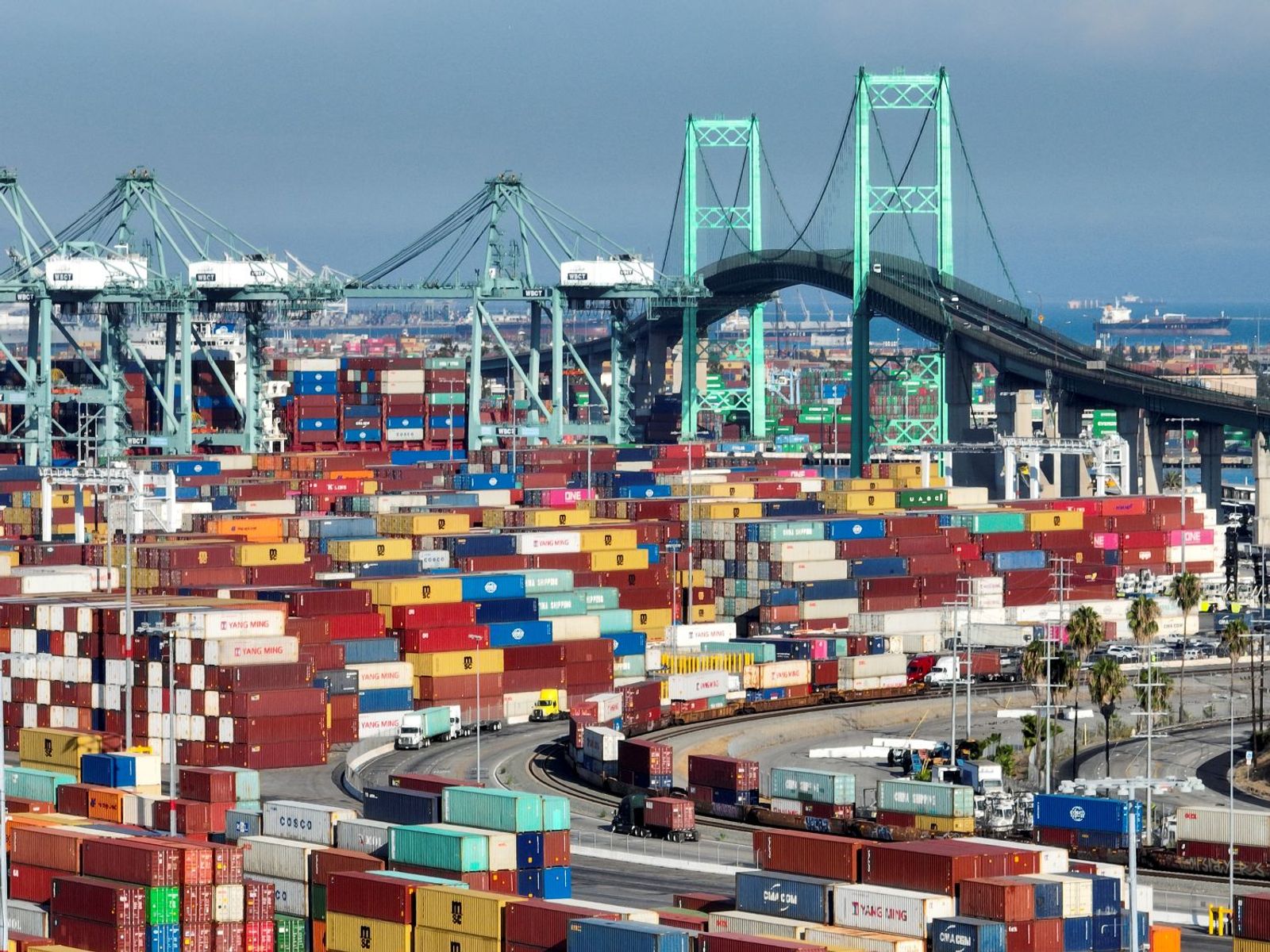
The Port of Los Angeles will expand two existing container terminals and develop an 89-acre chassis operations facility, it announced Thursday. That is in addition to building a new 200-acre container terminal, a project that was announced last year.
In order to retain its position as the largest US container port and accommodate growth, Los Angeles must expand its infrastructure and enable port stakeholders to operate more efficiently using technology, Gene Seroka, the port's executive director, said in his State of the Port address.
“We must build bigger and we must build smarter: bigger capacity, smarter technology, increased sustainability,”Seroka said.
The terminal expansion projects include development of a 40-acre site adjacent to Pier 300 and upgrading the LA Til container terminal in the port's West Basin. The port also plans to develop 80 acres of under-utilized land on Terminal Island into a maritime support facility for chassis parking and maintenance as well as for container pickups and dropoffs, Seroka said.
The port last October released a request for proposals to evaluate the interest in and feasibility of constructing a 200-acre facility to be called the Pier 500 Marine Container Terminal, which would include 3,000 linear feet of wharf space and two berths. Pier 500, to be developed on landfill, would be the first new container terminal built in Los Angeles in a generation, Seroka said.
The project is projected to be completed in 10 years once construction begins. That is faster than most new terminals built on landfill because over the past 20 years, rocks removed during other construction projects have been dumped on the 124-acre landfill site, raising it to about 15 feet below the water line.
Seroka said the port is in final discussions with Fenix Maritime Services, which operates Pier 300, to develop 40 acres of vacant land adjacent to the 300-acre terminal. The plan would be to add another berth and develop the site for terminal-related operations.
Los Angeles will soon be issuing an environmental impact report for the LA Til Container Terminal to upgrade the wharf and rail yard to accommodate larger container ships, Seroka said.
The Los Angeles-Long Beach port complex is operating at about 60% capacity utilization, which is a far cry from the 90%-plus utilization rate during the post-pandemic cargo surge that resulted in vessel backlogs and marine terminal congestion. However, with a projected doubling of container volumes in the port complex by 2040, the expansion projects should ensure that Los Angeles is well-positioned to handle future growth as well as the next generation of container vessels, Seroka said in his address.
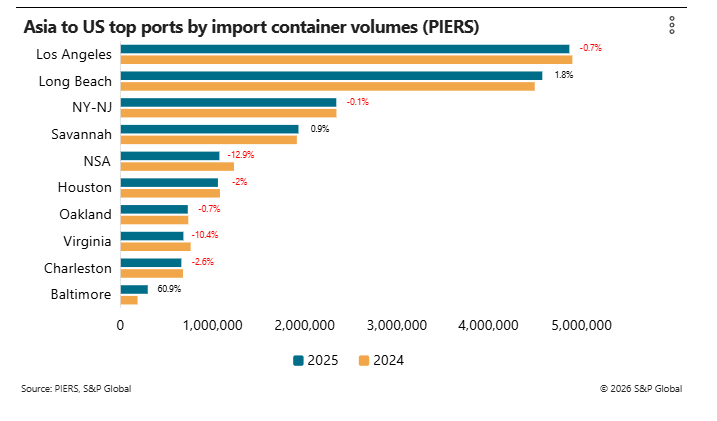
Los Angeles last year handled 10.2 million TEUs of laden and empty containers, which was its third-busiest year, he said.
The port handled 4.86 million TEUs of container imports from Asia last year, down 0.7% from 2024 but still the most among all US ports, according to PIERS, a sister product of the Journal of Commerce within S&P Global. Long Beach was second with 4.56 million TEUs.
Building a new bridge still possible
Meanwhile, re-decking of the Vincent Thomas Bridge at the entry to the Port of Los Angeles, which will begin in the coming months, will make the bridge safer for the 50,000 vehicles that cross it daily, Seroka said.
“But here's the bigger issue. We also need to raise or replace it to unlock our full terminal capacity north of the bridge. We pushed to do both together,”he said.“That timeline simply didn't work, but this issue is not going away. We’re working with the governor's office and California transportation officials to explore all options — which could include building a new crossing.”
The port continues to expand and improve its technology-driven programs, including the Port Optimizer to project container volumes in a three-week window, and the Universal Truck Appointment System which has improved gate usage at marine terminals by 20%, Seroka said.
“Building smarter also means investing in technology that powers everything we do,” he said.