

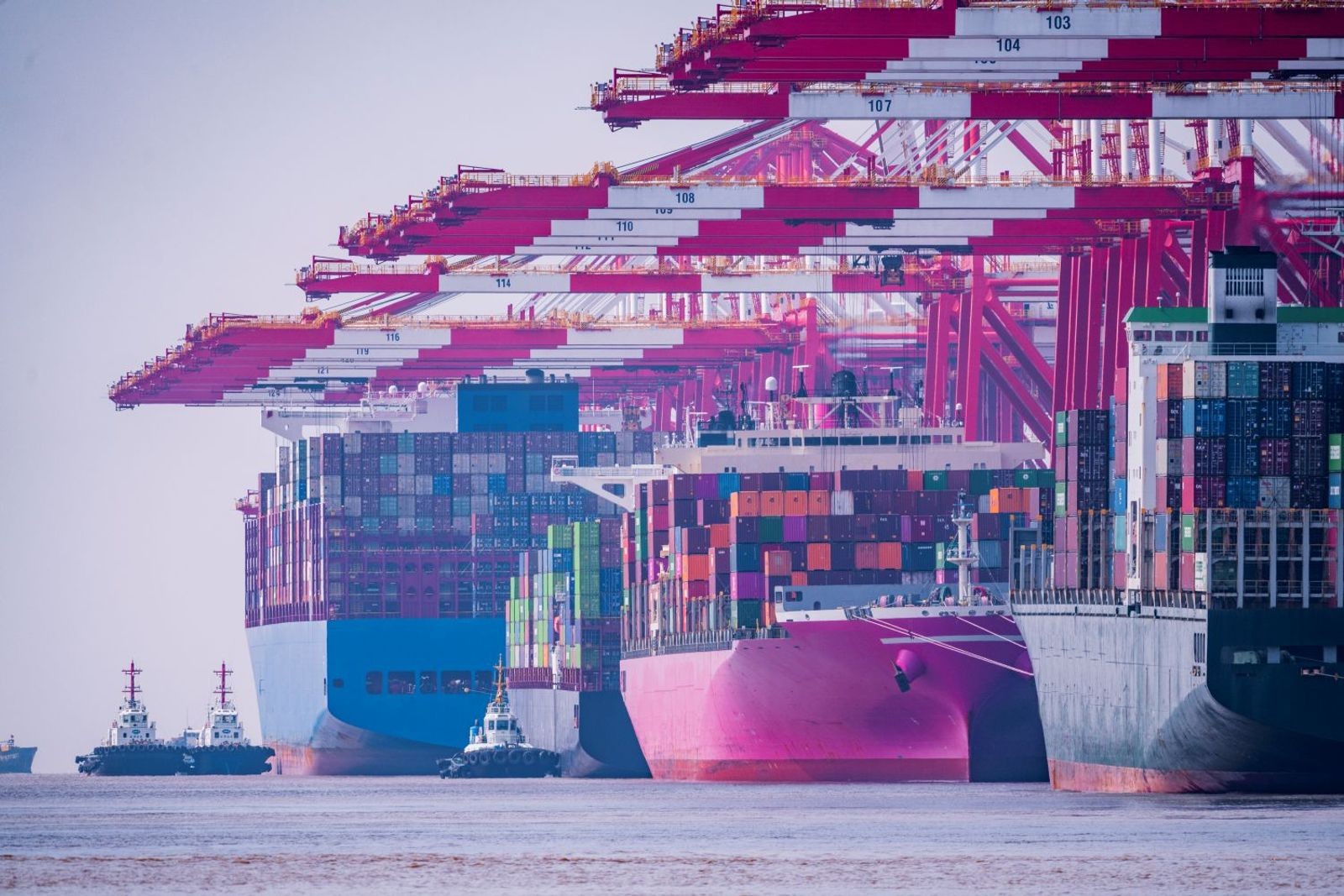
Shipping lines are facing worsening delays at three of China’s key gateway ports after they were closed due to super typhoon Bavi, which hit eastern and northern China last weekend.
Hapag-Lloyd said Shanghai and Ningbo were closed from midday on July 10 until early on July 13 when operations gradually resumed. All services were affected by the closure, including warehousing, the container yard, customs and vessel operations.
Hapag-Lloyd said there’s now a 72-hour wait at Shanghai’s Yangshan deepwater port for vessels operating Gemini services, up from 60 hours at the end of last month. Ships operating non-Gemini services are now having to wait six days before being able to berth, compared with five days two weeks ago.
“All emergency response measures [in Shanghai] were lifted on July 13 and port terminals, container yards, warehouses, and trucking services are fully operational,” Kuehne + Nagel said in an update Thursday.
The forwarder, meanwhile, said ships are having to wait more than three days in Ningbo compared with up to two days last month. K+N said the prolonged closure of Ningbo has caused “elevated congestion” at the port, with vessel waiting times only expected to ease toward the end of this month.
“Network disruptions from delayed vessel schedules may continue to affect operations in the coming weeks,” the forwarder added.
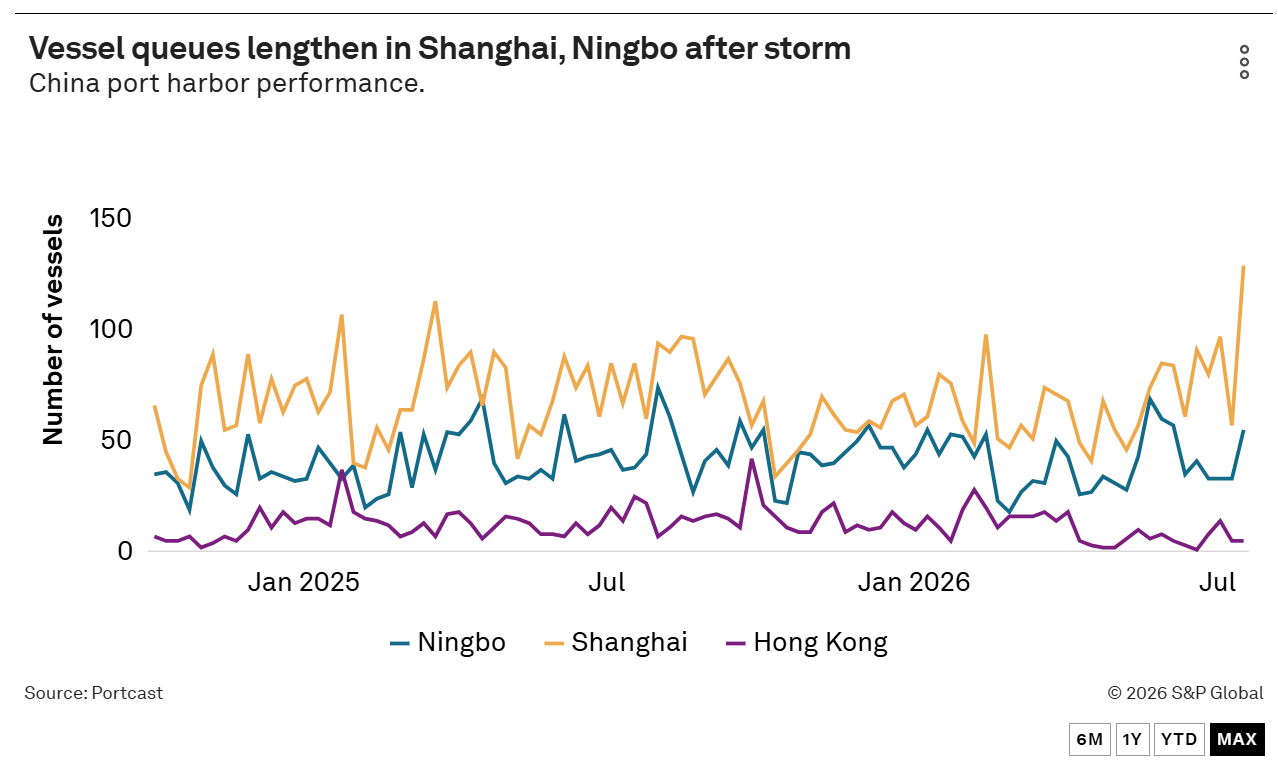
Shanghai and Ningbo are already seeing lengthening vessel queues.
At Shanghai, the queue of ships has more than doubled, jumping to 129 as of July 13 when the port reopened compared with 57 a week earlier, according to data from Portcast carried on the Journal of Commerce Gateway platform.
In Ningbo, the line of vessels lengthened from 33 to 55 over the same period.
Those vessels accounted for more than 1 million TEUs of capacity waiting to berth at the two ports, according to data from Linerlytica.
Qingdao was also closed between July 13 and July 14 as the typhoon looped northeastward across northern China after making landfall south of Ningbo.
Delays at Qingdao have increased to up to three days following the closure, compared with about 24 hours before Bavi hit the region. The resulting congestion is expected to put pressure on “terminal operations and vessel schedules in the near term,” K+N said.
Vessel schedules disrupted
Typhoon Bavi has also disrupted vessel schedules. Maersk said the 6,350-TEU One San Diego and the 6,492-TEU Aries operating the carrier’s Dragon service have omitted Shanghai and Ningbo this week due to the storm. Import cargo for both ports would be discharged in Hong Kong and transshipped.
Hapag-Lloyd said vessels operating a raft of Gemini and non-Gemini services skipped Shanghai and Ningbo at the weekend and early this week. Affected services include Gemini’s Pacific Southwest and US East Coast loops and several Hapag-Lloyd Asia-Latin America voyages.
Cargo bound for Shanghai and Ningbo on the services will be transshipped at Pusan, Hong Kong or Singapore to await return sailings.
Forwarders said Bavi also affected operations at other ports, including Xiamen and Fuzhou in eastern China, Kaohsiung and Keelung in Taiwan, and Manila in the Philippines, where some ships are experiencing delays of 10 to 12 days.