

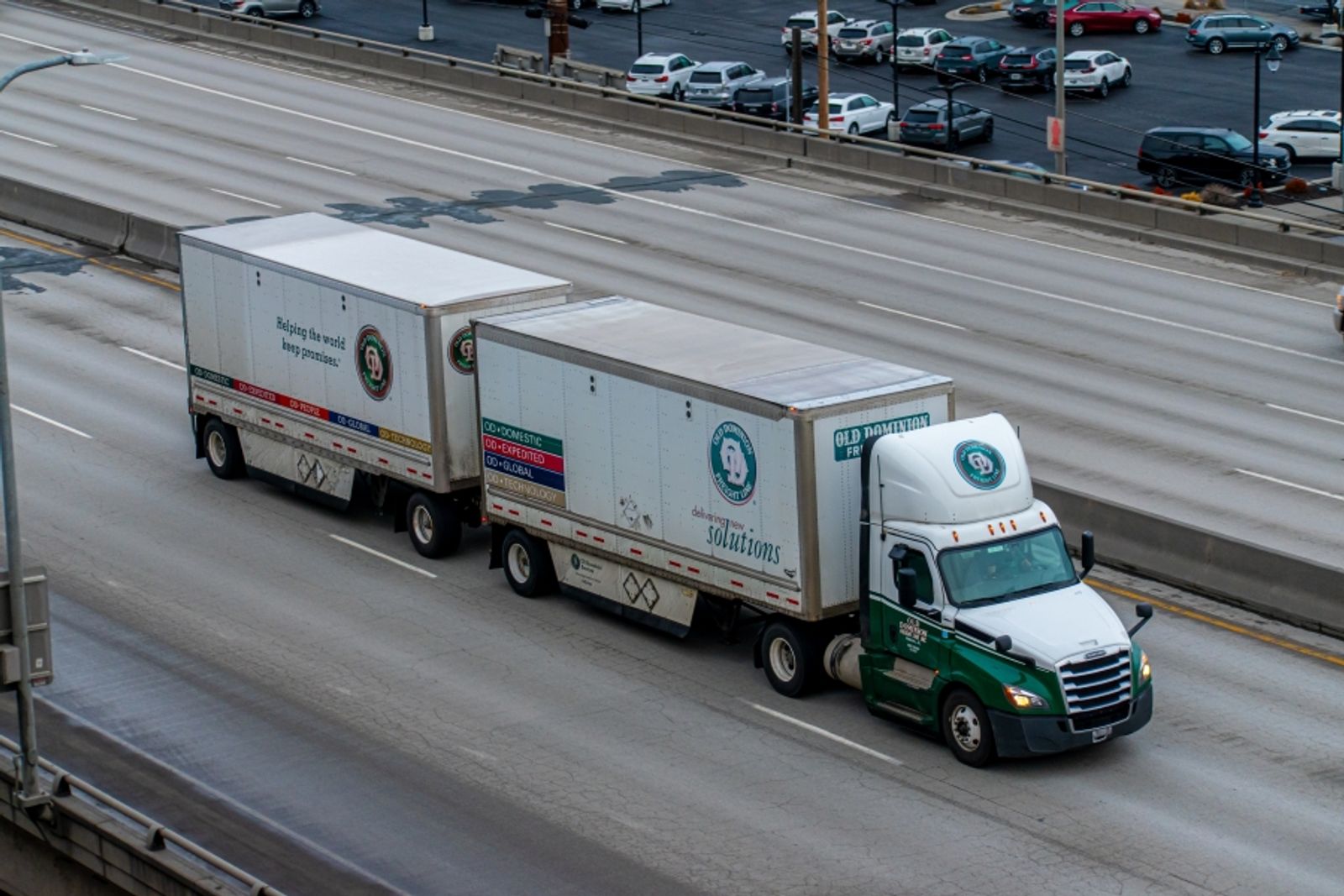
Second-quarter updates from two of the largest US less-than-truckload (LTL) carriers this week show shipments getting heavier, a potential sign of increased industrial demand as manufacturers boost production and build up inventories of finished goods.
Old Dominion Freight Line (ODFL) on Wednesday said its average shipment weight in May was up 1.6% from a year earlier. That’s a substantial increase from the first quarter, when shipment weight at the second-largest US LTL carrier rose 0.3% year over year.
Daily revenue leapt 12.3% at ODFL last month, boosted by higher rates and fuel surcharges. Daily shipment volumes, however, continued to decline, falling 5.6% in May from a year earlier, following a 7.9% drop in the first quarter and a 7.5% annualized decline in 2025.
“Demand has continued to improve as the quarter has progressed,” ODFL CEO Marty Freeman said in a statement Wednesday. He also cited initiatives to improve revenue per hundredweight, or yield. ODFL did not release LTL yield data for April or May.
At Saia, the sixth-largest US LTL provider, daily shipments rose 3.7% in May and LTL weight per shipment was up 4.5% year over year, the company said Tuesday.
In the first two months of the second quarter, Saia’s daily shipment count rose 4.6% while average daily tonnage was up 7.6%, the company said. In the first quarter, the carrier’s shipments increased 1% while tonnage per day rose 2.1% year over year.
Saia did not release revenue or yield data for April and May.
Saia’s daily shipment volume has been rising since February, when shipments per day ticked up 0.3%, followed by a 4.3% increase in March. The carrier is gaining freight “as it puts more dots on the map,” CFO Matthew Batteh said during an earnings call in April.
Saia has added terminals in Pennsylvania, Indiana and Washington State this year.
PMIs move higher in May
With domestic industrial freight representing the majority of LTL shipments at large carriers, LTL carriers overall stand to benefit from increased US manufacturing output. LTL carriers also say they are gaining some truckload freight as truckload rates rise.
The Purchasing Managers’ Indexes™ (PMIs®) produced by S&P Global, parent company of the Journal of Commerce, and the Institute for Supply Management (ISM) both show US manufacturing continued to expand in May, contributing to freight demand.
The S&P Global PMI rose to 55.1% in May from 54.5% the previous month as output growth hit its strongest level since April 2022. The ISM PMI registered 54% in May, 1.3 percentage points higher than in April, and the strongest reading for the ISM PMI since May 2022.
But the ISM index also showed supplier deliveries slowing — reflecting supply chain difficulties related to the US/Israeli war with Iran — and inventories rising. S&P Global said stockpiling was “widely evident” in May, while new orders rose at a strong pace.
That activity bolsters LTL demand, both for expedited transit of goods to warehouses once inputs arrive in the US and domestic transportation of inputs and finished goods. But the recent buildup in industrial activity may be short-term, S&P Global warned.
Stock building “makes it hard to take an accurate reading on the underlying health of the manufacturing economy, as growth will cool once this stock build has run its course,” said Chris Williamson, chief business economist at S&P Global Market Intelligence.